 Soulmate Gem
Soulmate Gem
Soulmate Gem
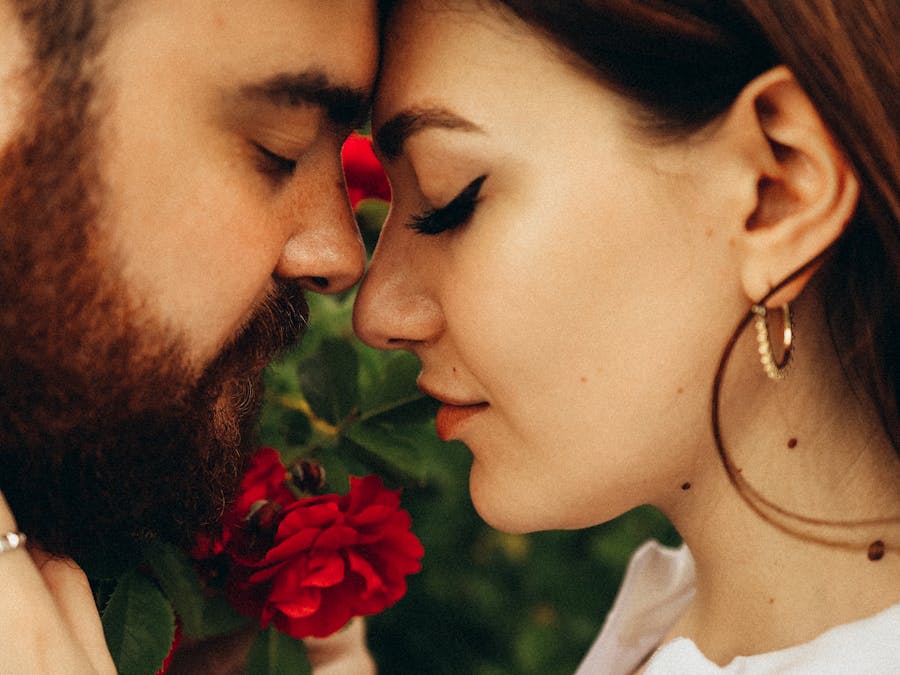
 Photo: Maksim Goncharenok
Norepinephrine, a hormone similar to dopamine, is also released in the initial stages of love (lust or infatuation) and this causes us to become giddy, energized, and euphoric. During sex with a partner, cortisol levels lower. Cortisol is the primary “stress” hormone that is released in intense situations.

Far from the Sun, where temperatures are low, water formed icy objects such as comets, while closer to the Sun water reacted with rocky materials...
Read More »
Here are some symptoms of deep love that you can watch for: You accept their flaws. ... You want to share everything with them. ... You share your...
Read More »A 2005 study by biological anthropologist Helen Fisher found that romantic love is primarily a motivation system, rather than an emotion (or set of emotions). Fisher and others have supported this finding by using fMRI (functional magnetic resonance imaging) to study the brains of people who are in love. So, what happens in your brain when you fall in love? According to 2017 Harvard Medical School research: Oxytocin, which is considered the “love hormone” responsible for our feelings of attachment and intimacy, is released. Dopamine is released, which activates the reward pathway in our brain, causing a “motivation/reward” affect. This is where the “addiction” part of love comes in. We seek out the reward of love even through obstacles that may be dangerous or painful (a cheating spouse, etc.). Norepinephrine, a hormone similar to dopamine, is also released in the initial stages of love (lust or infatuation) and this causes us to become giddy, energized, and euphoric. During sex with a partner, cortisol levels lower. Cortisol is the primary “stress” hormone that is released in intense situations. Having less of this helps us ease into a more relaxed and vulnerable state, which is oftentimes why “meaningless sex” with someone turns into something more; you’re vulnerable and have just gotten a big dose of hormones that make you feel attached and infatuated. Serotonin levels drop — this is important to note because the brains of people who have been diagnosed with obsessive-compulsive disorder (OCD) also have lower serotonin levels. This leads to speculation that being in love can make you act with obsessive-compulsive tendencies. The results of the Harvard study (combined with Fisher’s fMRI study on a brain in love) very strongly suggest that because love provides a kind of chemical feedback in our brains, recreating this chemical response may eventually become our human drive or motivation to stay in love.

While they share similarities (you'll feel like you were destined to meet them and they can both bring a lot of healing and growth to your life),...
Read More »
Dr. John Gottman, marriage expert and author of Why Marriages Succeed or Fail, would say that, yes, it is natural for your to think of your spouse...
Read More »Of course, some feelings of sadness, anger, resentment, and pain may linger on for a while longer. But typically, you’re able to see past your heartache and into what else life has to offer within three months of a relationship ending.

The first year of the relationship is the hardest stage, and even when you're living together, you still discover new things about each other every...
Read More »
We've all heard the term “Love is in the Air,” but can love really be in the eyes? Actually, science has proven it so! Certain chemicals (or...
Read More »This idea is corroborated by cognitive scientists at MIT, who explained that the overall brain processing power and detail memory peak for our brains happens around 18 years old. First love also affects us psychologically. According to Dr. Niloo Dardashti, a couples therapist based in New York, the feelings we experience with our first love become a blueprint for how we approach future relationships. In a very real way, just as our perception of platonic and familial love is forged in childhood by our parents or caregivers, our idea of romantic love is impacted by how we experience it for the first time. There is still be much research to be done on the true effects of love on the human brain, but from what we understand so far, love doesn’t just affect us while we experience it. Its impact on our biology can be felt for the rest of our lives, and the power of this phenomenon can be difficult to explain and understand, as Albert Einstein once put it: “How on earth are you going to explain in terms of chemistry and physics so important a biological phenomenon as first love?” Subscribe for counterintuitive, surprising, and impactful stories delivered to your inbox every Thursday Notice: JavaScript is required for this content. This article was originally published in October 2020. It was updated in March 2022.

Cute Selfie Captions “If you were looking for a sign, here it is.” “Remember that happiness is a way of travel – not a destination.” “Just because...
Read More »
You enter heaven by forgiveness and through the righteousness that Jesus gives you. You do not enter into heaven by the Christian life. It's always...
Read More »
Here is the list of those 7 most misunderstood zodiac signs. Gemini. Gemini folks aren't always malevolent or two-faced. ... Cancer. Cancerians are...
Read More »
Basically, the calculation works like this: You take the month and day of your birthday (ex: 07/04) and add that to your mom's birthday. Then, you...
Read More » Promotion
 Promotion
 Promotion
 Promotion