On 27 May 2008, Kevin Whittaker and Cory Jens broke the Guinness World Record for the World's Longest Handshake (single hand) in San Francisco, CA by shaking hands for 9 hours and 30 minutes, besting the previous record of 9 hours and 19 minutes set in 2006.
A handshake is a globally widespread, brief greeting or parting tradition in which two people grasp one of each other's like hands, in most cases accompanied by a brief up-and-down movement of the grasped hands. Customs surrounding handshakes are specific to cultures. Different cultures may be more or less likely to shake hands, or there may be different customs about how or when to shake hands.[1][2][3]
History [ edit ]
The handshake may have originated in prehistory as a demonstration of peaceful intent, since it shows that the hand holds no weapon.[4] Another possibility is that it originated as a symbolic gesture of mutual commitment to an oath or promise: two hands clasping each other represents the sealing of a bond. One of the earliest known depictions of a handshake is an ancient Assyrian relief of the 9th century BC depicting the Assyrian king Shalmaneser III shaking the hand of the Babylonian king Marduk-zakir-shumi I to seal an alliance.[5]
Archaeological ruins and ancient texts show that handshaking was practiced in ancient Greece (where it was called dexiosis) as early as the 5th century BC. For example, a depiction of two soldiers shaking hands can be found on part of a 5th-century BC funerary stele that is on display in Berlin’s Pergamon Museum (stele SK1708)[6] and on other funerary steles, such as one from the 4th century BC that depicts Thraseas and his wife Euandria shaking hands.[7]
Depictions of handshakes also appear in Archaic Greek, Etruscan and Roman funerary and non-funerary art.[8] Muslim scholars have written that the custom of handshaking was introduced to them by the people of Yemen.[9]
Gallery [ edit ]
Modern customs [ edit ]
Officers shaking hands
Shaking with the right hand while delivering a certificate with the left
Tennis players shaking hands after match
Leaders welcome a boy into Scouting , March 2010, Mexico City, Mexico. Note the left-handed handshake.
There are various customs surrounding handshakes, both generally and specific to certain cultures:
The handshake is commonly done upon meeting, greeting, parting, offering congratulations, expressing gratitude, or as a public sign of completing a business or diplomatic agreement. In sports or other competitive activities, it is also done as a sign of good sportsmanship. Its purpose is to convey trust, respect, balance, and equality. If it is done to form an agreement, the agreement is not official until the hands are parted.[10]
World Record 2008
Unless health issues or local customs dictate otherwise, a handshake is made usually with bare hands. It depends on the situation.[11]
Germ spreading [ edit ]
In which country PDA is not allowed?
The Middle East and India are two parts of the world where you'll encounter the strictest public display of affection laws. Kissing in public is...
Handshakes are known to spread a number of microbial pathogens. Certain diseases such as scabies are known to spread most frequently through direct skin-to-skin contact. A medical study has found that fist bumps and high fives spread fewer germs than handshakes.[1][2]
During the 2009 H1N1 pandemic, the dean of medicine at the University of Calgary, Tomas Feasby, suggested that fist bumps may be a "nice replacement of the handshake" in an effort to prevent transmission of the virus.[3]
Following a 2010 study that showed that only about 40% of doctors and other health care providers complied with hand hygiene rules in hospitals, Mark Sklansky, a doctor at UCLA hospital, decided to test "a handshake-free zone" as a method for limiting the spread of germs and reducing the transmission of disease.[21] UCLA did not ban the handshakes outright, but rather suggested other options like fist bumping, smiling, bowing, waving, and non-contact Namaste gestures. Other sources suggest raised brows, smiling, wai bow, two claps, hand over heart, sign language wave, or the shaka sign.[22]
During the COVID-19 pandemic, several countries and organisations adopted policies encouraging people to use alternative modes of greeting instead of a handshake.[23] Suggested alternatives included the elbow bump, the fist bump, foot tapping[24] or non-contact actions for social distancing purposes, such as a namaste gesture.[25] Footshaking was also suggested.[26]
Chemosignaling [ edit ]
It has been discovered as a part of a research in the Weizmann Institute, that human handshakes serve as a means of transferring social chemical signals between the shakers. It appears that there is a tendency to bring the shaken hands to the vicinity of the nose and smell them. They may serve an evolutionary need to learn about the person whose hand was shaken, replacing a more overt sniffing behavior, as is common among animals and in certain human cultures (such as Tuvalu, Greenland or rural Mongolia, where a quick sniff is part of the traditional greeting ritual).[27]
World records [ edit ]
In 1963, Lance Dowson shook 12,500 individuals' hands in 10+1⁄2 hours, in Wrexham, N. Wales. Atlantic City, New Jersey Mayor Joseph Lazarow was recognized by the Guinness Book of World Records for a July 1977 publicity stunt, in which the mayor shook more than 11,000 hands in a single day, breaking the record previously held by President Theodore Roosevelt, who had set the record with 8,510 handshakes at a White House reception on 1 January 1907. Dowson's record was recognised by the Guinness World Records Organisation and published in their 1964 publication.[citation needed] On 31 August 1987, Stephen Potter from St Albans shook 19,550 hands at the St Albans Carnival to take the world record for shaking most hands verified by the Guinness Book of World Records. In 1992 Scott Killon of Vancouver,Canada set a World Record of 25,289 hands at the Worlds Fair in Seville, Spain. A photo of Scott Killon with a Canadian Mountie is shown in the 1994 edition of the Guinness Book. The record has since been exceeded but has been retired from the book.
On 27 May 2008, Kevin Whittaker and Cory Jens broke the Guinness World Record for the World's Longest Handshake (single hand) in San Francisco, CA by shaking hands for 9 hours and 30 minutes, besting the previous record of 9 hours and 19 minutes set in 2006.[28] This record stood briefly until 16 August 2008 when Kirk Williamson and Richard McCulley were recognized by Guinness World Records for the longest time two people shook hands uninterruptedly for 10 hours at Aloha Stadium in Aiea, Hawaii USA. On 21 September 2009, Jack Tsonis and Lindsay Morrison then broke that record by shaking hands for 12 hours, 34 minutes and 56 seconds.[29] Their record was broken less than a month later in Claremont, California, when John-Clark Levin and George Posner shook hands for 15 hours, 15 minutes, and 15 seconds. The next month, on 21 November, Matthew Rosen and Joe Ackerman surpassed this feat, with a new world record time of 15 hours, 30 minutes and 45 seconds[30] certified in an edition of the Guinness Book of Records[which?] on page 111.
What is the cheapest art medium?
Watercolors are the cheapest to start with and mistakes can usually be fixed by adding a little water to the paper to lift the paint off. Mar 2, 2021
At 8 p.m. EST on Friday 14 January 2011 a new attempt at the longest hand-shake commenced in New York Times Square and the existing record was broken[31] by semi-professional world record-breaker Alastair Galpin[32][33] and Don Purdon from New Zealand and Nepalese brothers Rohit and Santosh Timilsina who agreed to share the new record after 33 hours and 3 minutes.[citation needed]
On 29 January 2020, a new world record for the longest handshaking relay was set by approximately 1,817 people in Abu Dhabi, United Arab Emirates at Umm Al Emarat Park in an event organized by the Abu Dhabi Police to celebrate the 1 year anniversary of the signing of the Document on Human Fraternity for World Peace and Living Together in the city.[34]
 Soulmate Gem

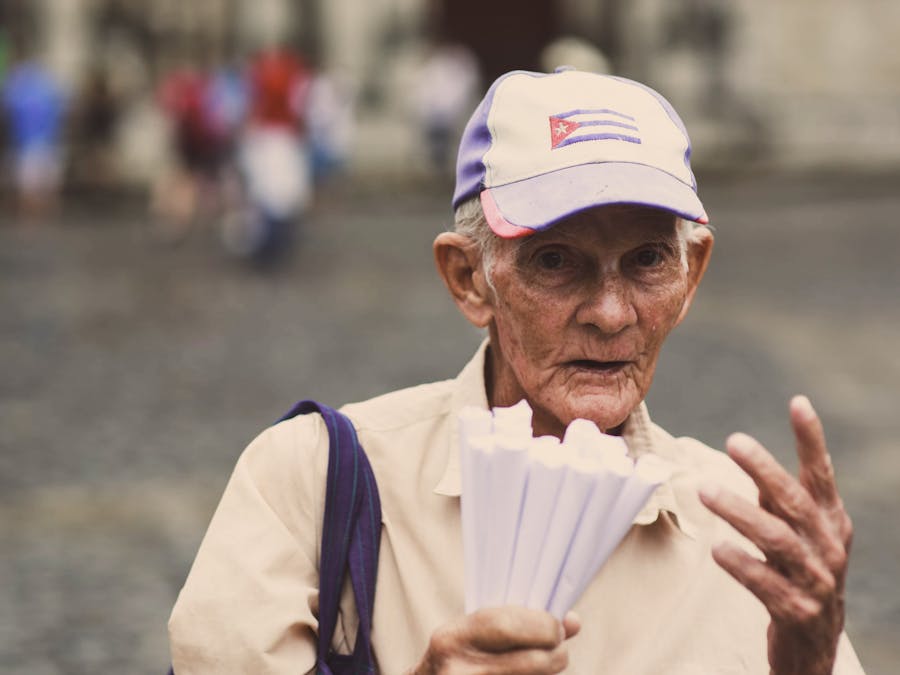
 Photo: Владимир Васильев



 Promotion
 Promotion
 Promotion
 Promotion
 Promotion